One Thankful Girl Messy Bun Fall Girls
When a design lands on my desk, I don’t just look at the preview and move on. I picture it stitched onto a tote bag, stretched across the back of a toddler’s sweatshirt, or centered on a kitchen towel that will be gifted at Thanksgiving. One Thankful Girl Messy Bun Fall Girls arrived as a digital cutting file — an SVG, PNG, DXF, and EPS bundle meant for Cricut and similar machines. But I’m an embroidery designer, so my first thought is always: how will this behave under thread, not just on a screen?
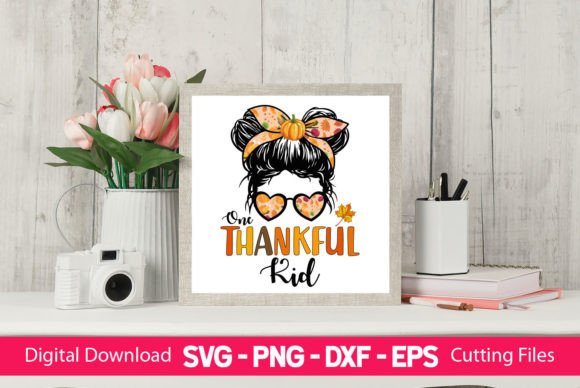
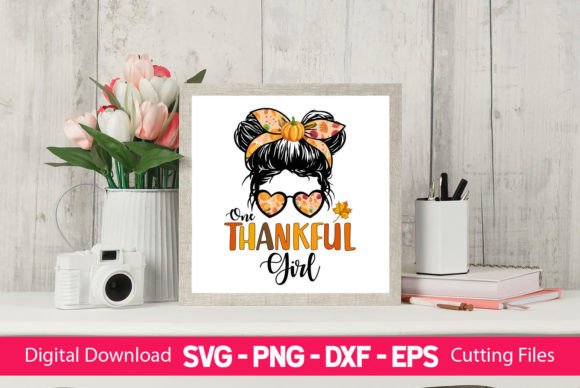
This is a Graphics product from the Crafts category, and right away the artwork tells a seasonal story. The phrase “One Thankful Girl” paired with a messy bun illustration feels like a cozy autumn morning. If you’re looking for a machine embroidery design that speaks to fall markets, boutique gift-giving, or personalized apparel, this design’s personality is already strong. But the real craft lies in translating a cut file into stitches that hold up on fabric day after day.
The Mood This Design Creates Before a Single Stitch
The messy bun silhouette is playful and relaxed, while the lettering carries a wholesome, gratitude-filled sentiment. Together they form a composition that feels handmade and approachable. The uneven, hand-drawn quality of the bun and the soft curves of the text would suit a fill stitch approach with subtle texture, or a satin stitch for the lettering if sizing allows. There’s nothing overly formal here — it’s a design that wants to live on a tote bag design, a cozy custom apparel piece, or a baby item like a tiny blanket or bib.
I immediately imagined this on a natural canvas tote for a fall craft fair. The earthy thread colors — warm mustard, burgundy, deep olive, or even a soft terracotta — would complement the autumnal theme. The visual weight of the text and graphic feels balanced, which is a detail I always check before committing to a hoop. Off-center compositions can look awkward on finished products, but this one sits with a pleasant hierarchy: the messy bun acts as an anchor, the words sweep below it, and the whole piece reads as a single, unified shape.
Real-Life Embroidery Project: From Screen to Stitched Tote
Let me walk you through a real scenario. I wanted to test how One Thankful Girl Messy Bun Fall Girls would work as a custom embroidered tote bag. I digitized the SVG from the bundle, isolating the lettering and the messy bun into separate objects. The text was converted to a satin stitch, and the bun became a fill stitch with a light running stitch outline to keep the edges crisp without adding bulk. I chose a medium-weight cotton canvas, hooped with a cutaway stabilizer, and tested on a scrap piece first — a habit I can’t recommend enough.
The lettering had to be large enough to avoid small, dense satin columns that could pull or pucker. At a 5-inch width, the thinnest parts of the “Thankful” script were still legible, but I wouldn’t go below 4 inches without simplifying the font. That’s something to keep in mind if you plan to stitch this design onto a baby embroidery project or a small patched cap. Tiny lettering loses its charm quickly under thread, and the messy bun’s wispy hair strands need breathing room to avoid turning into a blob.
Fabric, Hoop Size, and the Danger of Textured Surfaces
One of the first things I test is how a design behaves on different fabrics, because a customer’s plush sweatshirt embroidery will react differently than a flat pillow cover. The messy bun illustration has delicate, curving lines that mimic hair strands. On a smooth, medium-weight cotton, those lines digitized beautifully as single running stitches, but on a thick, napped fabric like a fleece pullover, they began to sink and lose definition. That doesn’t mean the design fails — it means you need to adjust underlay, increase pull compensation, and consider a heavier stabilizer than you’d use for a tea towel.
Hoop size is another practical checkpoint. This design feels most comfortable digitized for a 5×7 or larger hoop. A 4×4 hoop is too restrictive; the text would have to shrink so much that the “Thankful” might lose the center counters in letters like “a” and “e.” If you’re offering this as a personalized gift on a cap, be prepared to simplify the messy bun into a bolder shape, because the curve of a hat brim will distort fine details anyway. I’d reserve cap use for just the text portion, and leave the full design for flat surfaces like tea towels, pillow covers, or the back panel of a denim jacket.
Practical Digitizing Notes for Small Shop Owners
Because the original file is a cutting machine graphic, not a pre-digitized embroidery file, you’ll need to do the conversion yourself or work with a digitizer. The shapes are clean, though, and the SVG separates well into layers. I tested the black and white mockup to see how the design would read without color, and the silhouette held up nicely — good news for anyone who wants to offer a tone-on-tone embroidered patch or a single-color tote bag design. The contrast between the thick bun and the finer script provides natural visual interest even without multiple thread colors.
When choosing thread colors, I’d advise testing a warm neutral palette first. A deep burnt orange for the bun, a soft cream for the lettering, or even a metallic gold for the text on a dark background. The design has enough personality to stand out on dark fabric, but you’ll need to account for show-through. A dark sweatshirt with a light fill stitch behind the bun can prevent the fabric color from dulling the embroidery. I always test on the exact fabric and color the client will use — that’s a non-negotiable step for commercial embroidery work.
Where This Design Shines in a Craft Business
If you’re a handmade product seller, this design has a clear seasonal audience. Fall markets, Thanksgiving pop-ups, and autumn boutique displays are where One Thankful Girl Messy Bun Fall Girls feels most at home. It’s specific enough to feel like a limited offer, but universal enough to sell across ages — a young girl’s sweatshirt, a mom’s apron, a grandmother’s kitchen towel. That versatility is exactly what I look for in a digital design asset before adding it to my shop rotation.
On an Etsy seller’s listing, the design previews well. A printable mockup showing the design on a linen pillow cover or a child’s three-quarter sleeve tee immediately communicates giftability. The phrase “One Thankful Girl” invites personalization, and I’ve seen customers react warmly to designs that feel like they were made just for them. That emotional connection translates to repeat buyers, especially when the finished product looks as clean as the mockup promised.
Licensing, Commercial Use, and Protecting Your Work
I never skip the licensing review. The product description doesn’t spell out commercial terms, so before you stitch this design onto goods for sale, you need to confirm with the creator what is allowed. Some digital file bundles are for personal use only, and using them on merchandise without permission can put your small shop at risk. This is a Graphics product intended for cutting machines, but the same principle applies when you digitize it for embroidery. Always keep a record of the license and, if needed, reach out to the designer directly.
When to Be Cautious and What to Test First
This design won’t be a one-size-fits-all solution. On stretchy fabric like a performance tee, the messy bun’s fill stitch could distort if the underlay isn’t dense enough or if you skip a fusible backing. On lightweight fabric, the thread tension might pull the weave, creating puckers around the lettering. I’d avoid using it on thin, silky materials altogether — the design needs a stable foundation. Layered garments, like a zip-up hoodie with a messy seam down the center, also pose alignment challenges that could throw off the symmetry.
Dense stitch areas, particularly where the bun meets the text, need careful pathing. I always run a stitch density check in my digitizing software before sending the design to the machine, and I recommend a test stitch-out on a similar fabric scrap. That one step saves me from ruined blanks and unhappy customers. If you’re new to embroidery, start with a simple, flat item like a pillow cover or a tea towel, master the design’s behavior there, and then move to apparel.
Final Thoughts from the Hoop
After testing, tweaking, and holding the finished tote bag in my hands, I can say that One Thankful Girl Messy Bun Fall Girls carries a warmth that machine embroidery can amplify when done right. The messy bun’s texture and the heartfelt phrase make it a standout piece for fall gifting and boutique product lines. It’s not a ready-to-stitch embroidery file, but as a clean, well-organized SVG, it digitizes smoothly and delivers a polished handmade product.
For the craft business owner, the Etsy seller, or the apparel decorator who’s willing to put in the digitizing work, this design holds real potential. It invites the kind of customer reaction that turns a simple sweatshirt embroidery into a cherished keepsake. Just remember to test thoroughly, respect the original file’s licensing, and choose your fabrics and stabilizers with the same care you’d give any embroidery project. The design already has the heart — your job is to stitch it into something that lasts.